Digital Work Permit System Simplifies Everyday Operations at Meyer Turku Shipyard
Digital Work Permit System Simplifies Everyday Operations at Meyer Turku Shipyard
Digital Work Permit System Simplifies Everyday Operations at Meyer Turku Shipyard
Digital Work Permit System Simplifies Everyday Operations at Meyer Turku Shipyard
Gate Apps
Dec 23, 2025
Gate Apps
Dec 23, 2025

At the Meyer Turku shipyard, around six thousand people—both employees and subcontractors—work every day in the complex and tightly supervised environment of shipbuilding. Safety is of utmost importance.
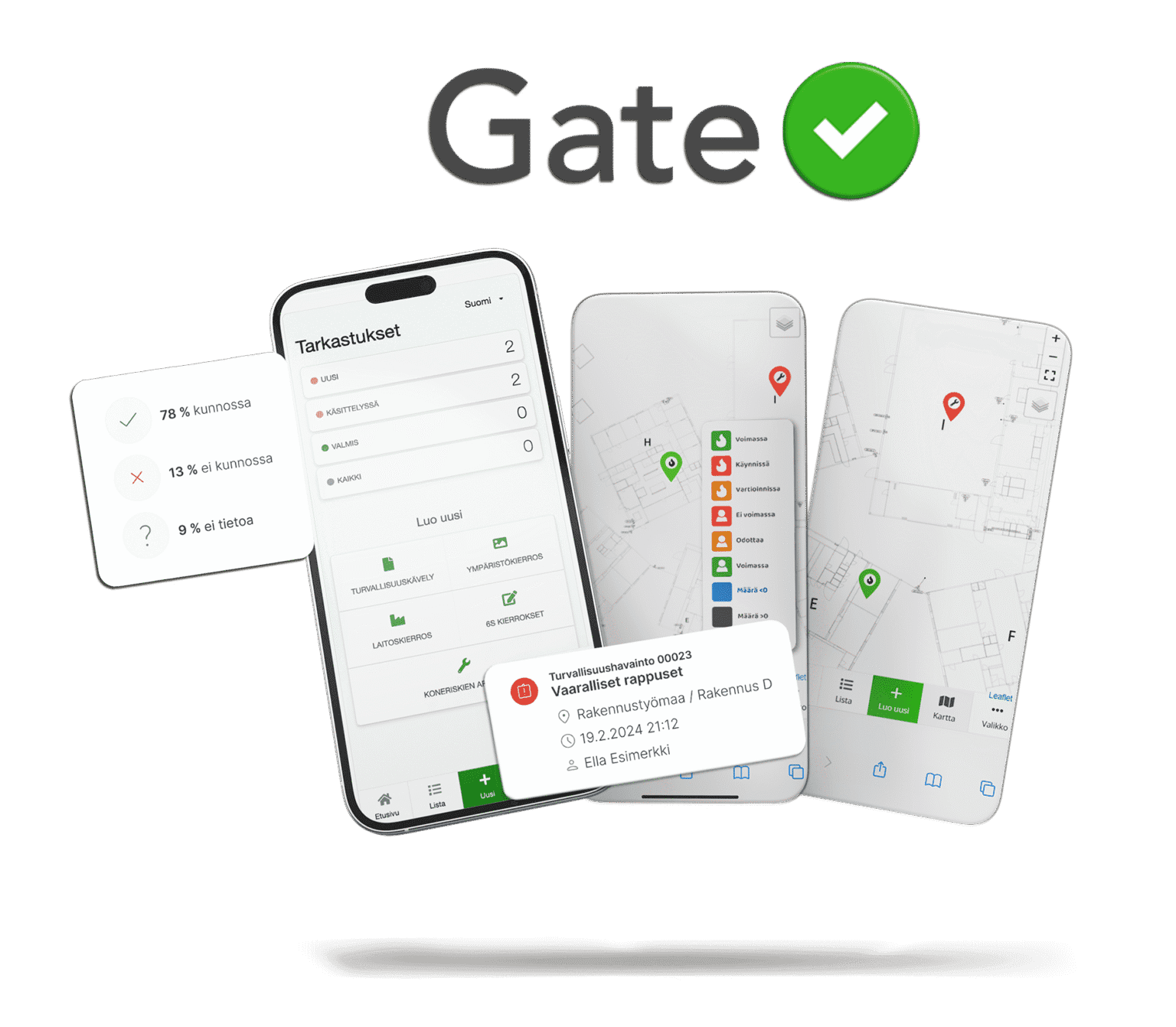
Deputy Fire Chief Ville Rahkala has been using Gate Apps’ digital work permit system for years. He has been involved in developing the solution together with the Gate Apps team to ensure it best supports work done on ship’s board.
Ease of Use and a New Operating Model as the Starting Point
“Our starting point was clear: the shipyard’s fire department needs real-time information about all hot work permits, and from the workers’ perspective, the digital tool must be extremely simple and easy to use,” Rahkala explains.
Because the shipyard is a networked work environment, it was important to ensure the system runs smoothly for all users—including subcontractors—directly on their own mobile phones.
“We thought, what if the process could work so that workers simply notify us what hot work they’re doing and where. Then the firefighters can go and inspect the riskiest locations. When we introduced the digital work permit system, we also reformed our entire operating model,” Rahkala describes.
The Digital System Saves Time and Resources
Previously, firefighters wrote hundreds of permits every morning before work could even begin. Now, only a few dozen permits need to be approved by the fire department each day, even though there are still 500–600 active permits at any given day.
“This approach would not be possible without a digital work permit system. The worker network has been happy with the change—no more waiting for permits, and we save a great deal of time. The benefits can be seen directly in the overall shipbuilding schedule,” Rahkala notes.
Firefighters now have more time and energy to focus on what truly matters: ensuring safety and carrying out preventive work instead of writing permits.
Collaboration and Reception Exceeded Expectations
“The reception for the new operating model and digital work permit system was surprisingly positive—everyone embraced it! That’s not always the case when introducing something completely new,” Rahkala smiles.
Although the system has already proven effective, development continues: “There are always small things to improve and simplify. Simplicity and ease of use remain the foundation for everything we do. Next, we want to expand the system’s use beyond ships to include halls and other stages of work where work permits are needed. The goal is for the system to be in use throughout the entire process—from block yard to final delivery,” Rahkala explains.
“Easy to Recommend – Works on Both Large and Small Scales”
Would you recommend Gate Apps’ solution to others? If yes, why?
“Yes, I definitely would—and it’s easy to recommend because I’ve been deeply involved in its development and have been able to leave my own mark on how it now works,” Ville says, adding: “It’s been great to collaborate with Gate Apps.”
“I think the solution suits anyone who wants to manage work permits easily and clearly. It works well in large environments with many people and diverse cultures, as well as out in the field—where the actual work happens—because the system is simple, easy to use, and scalable. Smaller teams can also benefit from it. We process 700–800 work permit notifications a day, and the system has handled the load perfectly. There are many possible applications—the solution can be adapted to virtually any work environment.”
“Start with Clear Goals – and Keep Things Simple”
What advice would you give to companies considering working with Gate Apps?
“It’s best to start with clear goals: what do you want to achieve and what should the system be built around,” Ville advises. “For us, it all started with a simple idea—a QR code. Then we tested it in practice with a smaller group and expanded from there. The most important thing is to have clear boundaries and a purpose, but also a willingness to learn new things.”
At the Meyer Turku shipyard, around six thousand people—both employees and subcontractors—work every day in the complex and tightly supervised environment of shipbuilding. Safety is of utmost importance.
Deputy Fire Chief Ville Rahkala has been using Gate Apps’ digital work permit system for years. He has been involved in developing the solution together with the Gate Apps team to ensure it best supports work done on ship’s board.
Ease of Use and a New Operating Model as the Starting Point
“Our starting point was clear: the shipyard’s fire department needs real-time information about all hot work permits, and from the workers’ perspective, the digital tool must be extremely simple and easy to use,” Rahkala explains.
Because the shipyard is a networked work environment, it was important to ensure the system runs smoothly for all users—including subcontractors—directly on their own mobile phones.
“We thought, what if the process could work so that workers simply notify us what hot work they’re doing and where. Then the firefighters can go and inspect the riskiest locations. When we introduced the digital work permit system, we also reformed our entire operating model,” Rahkala describes.
The Digital System Saves Time and Resources
Previously, firefighters wrote hundreds of permits every morning before work could even begin. Now, only a few dozen permits need to be approved by the fire department each day, even though there are still 500–600 active permits at any given day.
“This approach would not be possible without a digital work permit system. The worker network has been happy with the change—no more waiting for permits, and we save a great deal of time. The benefits can be seen directly in the overall shipbuilding schedule,” Rahkala notes.
Firefighters now have more time and energy to focus on what truly matters: ensuring safety and carrying out preventive work instead of writing permits.
Collaboration and Reception Exceeded Expectations
“The reception for the new operating model and digital work permit system was surprisingly positive—everyone embraced it! That’s not always the case when introducing something completely new,” Rahkala smiles.
Although the system has already proven effective, development continues: “There are always small things to improve and simplify. Simplicity and ease of use remain the foundation for everything we do. Next, we want to expand the system’s use beyond ships to include halls and other stages of work where work permits are needed. The goal is for the system to be in use throughout the entire process—from block yard to final delivery,” Rahkala explains.
“Easy to Recommend – Works on Both Large and Small Scales”
Would you recommend Gate Apps’ solution to others? If yes, why?
“Yes, I definitely would—and it’s easy to recommend because I’ve been deeply involved in its development and have been able to leave my own mark on how it now works,” Ville says, adding: “It’s been great to collaborate with Gate Apps.”
“I think the solution suits anyone who wants to manage work permits easily and clearly. It works well in large environments with many people and diverse cultures, as well as out in the field—where the actual work happens—because the system is simple, easy to use, and scalable. Smaller teams can also benefit from it. We process 700–800 work permit notifications a day, and the system has handled the load perfectly. There are many possible applications—the solution can be adapted to virtually any work environment.”
“Start with Clear Goals – and Keep Things Simple”
What advice would you give to companies considering working with Gate Apps?
“It’s best to start with clear goals: what do you want to achieve and what should the system be built around,” Ville advises. “For us, it all started with a simple idea—a QR code. Then we tested it in practice with a smaller group and expanded from there. The most important thing is to have clear boundaries and a purpose, but also a willingness to learn new things.”
Contact Us
Ask us directly for more information or by sending an inquiry through the form.



Book a demo
Book a demo
Ask Tomi directly for more information or by sending an inquiry through the form.

Tomi Lehtinen
Head of Growth
tomi.lehtinen(at)gate-apps.com
+358 50 348 4044