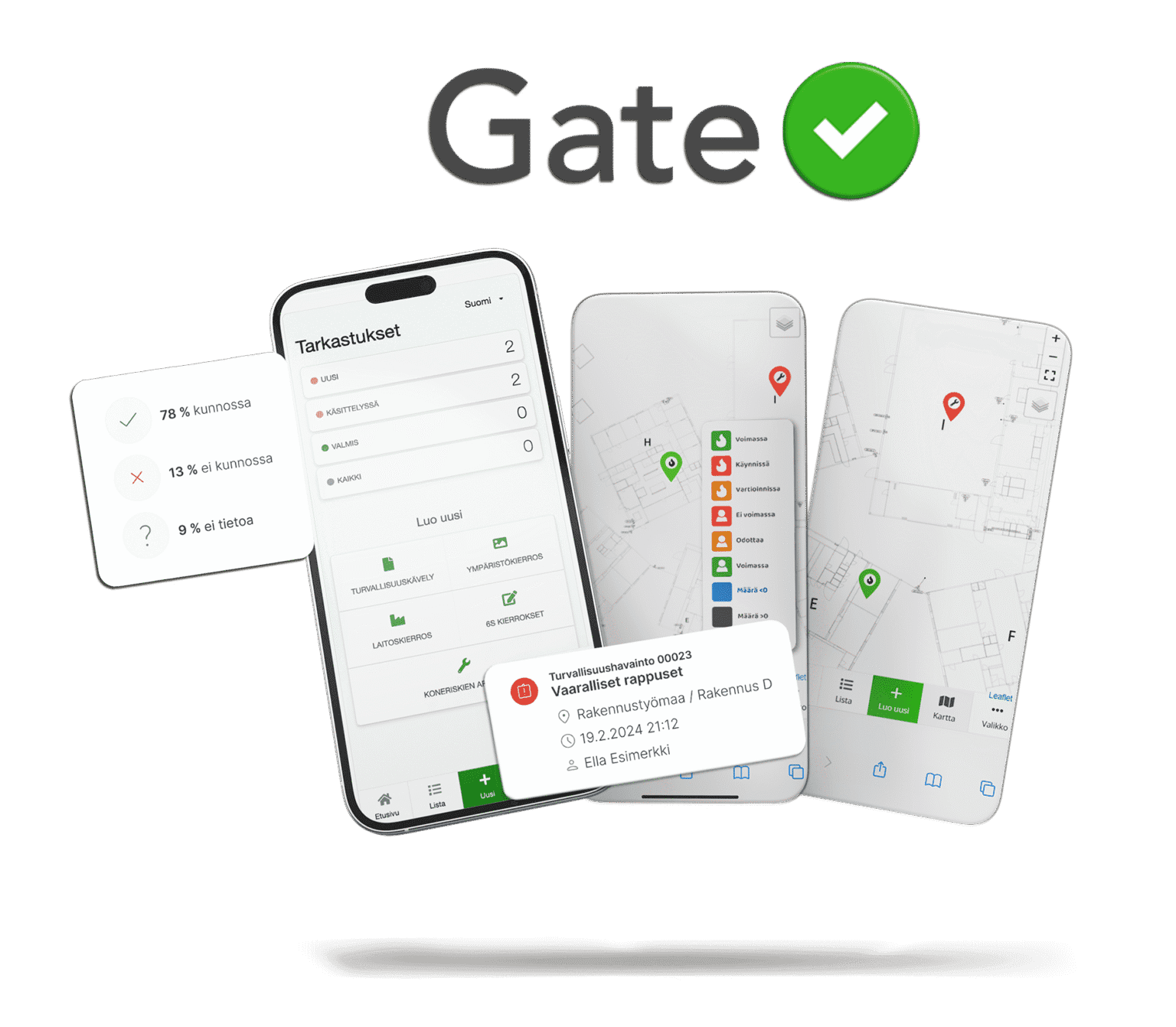


Safety Observations
Sicherheitsbeobachtungen
Eine Sicherheitsbeobachtung ist eine Arbeitsplatznotiz über einen mit Sicherheit zusammenhängenden Mangel oder gute Praxis. Warum ist es wichtig, selbst die kleinsten Beobachtungen zu dokumentieren, und wie verbessert die systematische Nutzung von Sicherheitsbeobachtungen die Arbeitssicherheit?
Was sind Sicherheitsbeobachtungen?
Sicherheitsbeobachtungen sind Arbeitsplatzfunde in Bezug auf Sicherheit – dazu gehören Gefahren, "Beinahe-Unfälle", Mängel in den Sicherheitsvorkehrungen oder sogar gute Praktiken, die Anerkennung verdienen.
Beispiele hierfür sind:
Ein elektrisches Kabel, das auf dem Boden liegt und zu einem Stolpern führen könnte.
Ein schlecht gesichertes Gerüst.
Ein Chemiefass ohne ordnungsgemäße Kennzeichnung.
Ein neues Verfahren zur Verbesserung der Ergonomie, das von einem Mitarbeiter erfunden wurde.
Der wesentliche Punkt ist, dass die Person, die die Beobachtung macht, dies über die vereinbarte Methode der Organisation meldet, damit die Situation angesprochen werden kann, bevor Schäden auftreten.
Sicherheitsbeobachtungen werden häufig wie folgt kategorisiert:
Negative Beobachtungen: Mängel, Risiken, gefährliche Situationen.
Positive Beobachtungen: Gute Sicherheitsaktionen oder Praktiken, die über das Baseline-Niveau hinausgehen.
Ein Beispiel: Ein Mitarbeiter, der regelmäßig seinen Arbeitsplatz aufräumt und Stolpergefahren beseitigt, verdient eine positive Beobachtung. Positive Beobachtungen helfen sicherzustellen, dass die Sicherheitskultur nicht nur darin besteht, "Fehler zu suchen", sondern auch gute Praktiken anzuerkennen.
Warum Sicherheitsbeobachtungen einreichen?
Jede Sicherheitsbeobachtung ist eine Chance, einen Unfall im Voraus zu verhindern. Heinrichs Dreieck (das Unfallverhältnis) legt nahe, dass es für jeden schweren Unfall Dutzende von leichten Unfällen und Hunderte von Beinahe-Unfällen gibt. Kleine Abweichungen oder Fehler, wenn sie nicht korrigiert werden, können im Laufe der Zeit zu schweren Unfällen führen.
Die Durchführung von Sicherheitsbeobachtungen ist auch eine rechtliche Pflicht:
Nach dem Arbeits-sicherheits- und Gesundheitsschutzgesetz (738/2002), Abschnitt 19, müssen die Arbeitnehmer ihren Vorgesetzten (und gegebenenfalls andere Arbeitgebervertreter) unverzüglich über jegliche Mängel oder Defizite informieren, die Gefahr oder Schaden verursachen könnten.
Selbst wenn das Problem bereits behoben ist, muss der Bericht dennoch erstattet werden, damit das Management und die Sicherheitskräfte den Fall prüfen und daraus lernen können.
Vorteile auf einen Blick
Prävention: Risiken werden frühzeitig angesprochen, was die Wahrscheinlichkeit von Unfällen reduziert.
Verbesserung der Sicherheitskultur: Arbeitnehmer sehen, dass ihre Berichte zu Maßnahmen führen, und stärken damit das gemeinsame Engagement für die Sicherheit.
Rechtliche und ethische Verantwortung: Das Dokumentieren von Beobachtungen zeigt ernsthaftes Engagement für Sicherheit und unterstützt die Einhaltung.
Lernen und kontinuierliche Verbesserung: Daten aus Beobachtungen heben Trends hervor und ermöglichen gezielte Schulungen und Sicherheitsverbesserungen.
Wie werden Sicherheitsbeobachtungen effektiv verarbeitet?
Es reicht nicht aus, lediglich Beobachtungen zu machen – eine effektive Verarbeitung ist der Schlüssel. Ein typischer Prozess umfasst:
Berichterstattung über die Beobachtung
Arbeitnehmer erstatten Berichte sofort.
Methoden: Papierformulare, mündliche Berichte oder zunehmend digitale/mobile Apps.
Empfang und Protokollierung
Sicherheitsbeauftragte/Manager erhalten und protokollieren den Bericht.
Beobachtungen werden nach Schweregrad und Art klassifiziert.
Korrekturmaßnahmen
Gefahren werden sofort angegangen.
Langfristige Lösungen werden geplant (z. B. Hinzufügen von Schutzgeländern).
Weniger schwerwiegende Probleme werden trotzdem dokumentiert, einem verantwortlichen Mitarbeiter zugewiesen und mit einer Frist versehen.
Nachverfolgung
Systeme senden Erinnerungen und eskalieren, wenn Korrekturmaßnahmen verzögert oder ignoriert werden.
Feedback an den Berichterstatter
Berichterstatter werden bedankt und über die ergriffenen Maßnahmen informiert.
Positive Beobachtungen sollten belohnt oder anerkannt werden (z. B. im Intranet), um weitere Berichte zu ermutigen.
Moderne HSEQ-Systeme machen diesen Workflow reibungslos mit mobiler Berichterstattung, Fotos, automatischen Benachrichtigungen und klarer Statusverfolgung.
Ein digitales Werkzeug zur Erfassung von Beobachtungen
Die Beobachtungskultur wird gestärkt, wenn die Mitarbeiter einfache Werkzeuge zum Berichten haben. Wenn die Berichterstattung sofort über eine Telefon-App erfolgen kann, sinkt die Hürde zur Einreichung erheblich.
Es wird oft gesagt:
„Verdopple die Anzahl der Sicherheitsbeobachtungen, und du halbierst die Anzahl der Unfälle.”
Vorteile einer Sicherheitsbeobachtungs-App/-Systems
Einfache Nutzung im Feld: Direkt vom Arbeitsplatz berichten.
Fotos und Standortdaten: Helfen anderen, die Schwere einzuschätzen.
Echtzeitinformationen: Sofortige Benachrichtigungen an die verantwortlichen Mitarbeiter.
Statistiken und Berichte: Trenddaten helfen, Verbesserungen zu anvisieren.
Integration in den Betrieb: Beobachtungen verbinden sich mit kontinuierlichen Verbesserungprozessen (z. B. Auslösen von Risikobewertungen oder Aktualisierungen von Anweisungen).
Zusammenfassung: Kleine Beobachtungen – große Wirkung
Sicherheitsbeobachtungen sind eine der effektivsten Möglichkeiten, die Arbeitssicherheit kontinuierlich zu verbessern. Wenn Mitarbeiter aktiv Risiken und gute Praktiken melden, gewinnen Organisationen wertvolles Wissen, um Unfälle zu verhindern.
Eine Kultur der gemeinsamen Sicherheitsverantwortung basiert auf Offenheit und Initiative.
Die Rolle des Managements: Berichten Sie es einfach, reagieren Sie konstruktiv auf jeden Bericht und setzen Sie den Ton.
Verfügbare Werkzeuge: Zum Beispiel macht die HSEQ-App von Gate Apps die Berichterstattung im Feld schnell und ansprechend, mit klaren Managementberichten.
Hat Ihr Arbeitsplatz bereits das volle Potenzial von Sicherheitsbeobachtungen ausgeschöpft?
Wenn nicht, besteht der einfachste Weg darin, ein digitales System zu übernehmen, das alle Beobachtungen erfasst und verfolgt. Buchen Sie eine Demo der Lösung von Gate Apps und sehen Sie, wie sie die Verwaltung von Sicherheitsbeobachtungen in Ihrer Organisation optimieren könnte.